
Review · KUSADASI
Kusadasi: Ephesus and Virgin Mary Tour for Cruise Guests
Ephesus is the main event here: a Roman city of marble streets, grand monuments, and a theater where St. Paul preached. I like that you get a licensed local guide rather than simply being dropped at the ruins, and I like the short route, which fits neatly into a cruise day. The House of the Virgin Mary adds a quieter religious stop, while Artemis Temple gives you a quick look at one of the ancient world’s Seven Wonders.
The catch is that entrance fees are not included in the $24 price. You should also ask how the day will handle the optional lunch and handicraft visits. Several guides have taken families to local meals and carpet or pottery demonstrations, but one guest found the sales pitch at those stops too strong.
Key points to know before booking
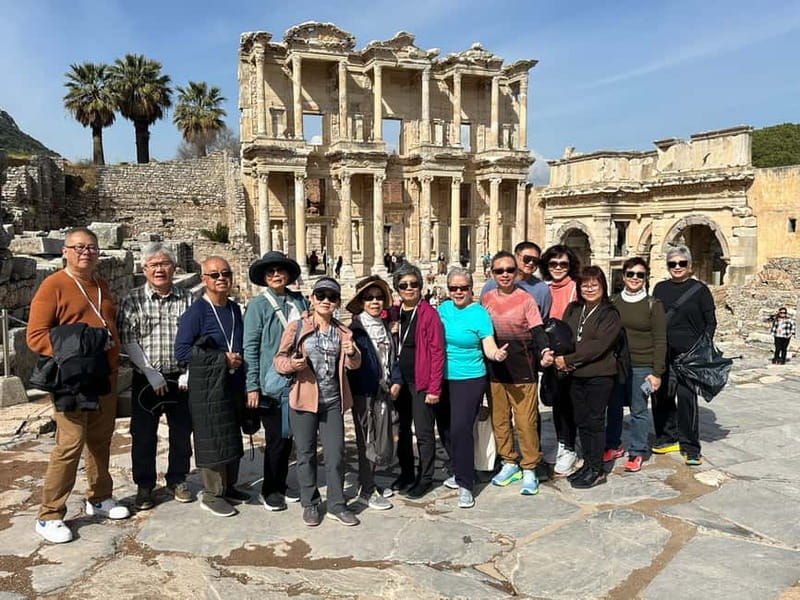
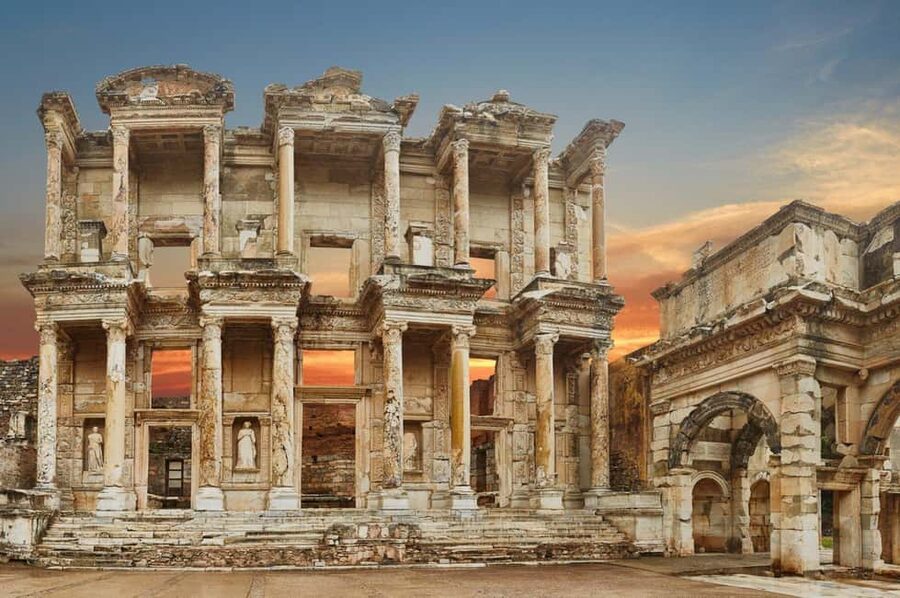
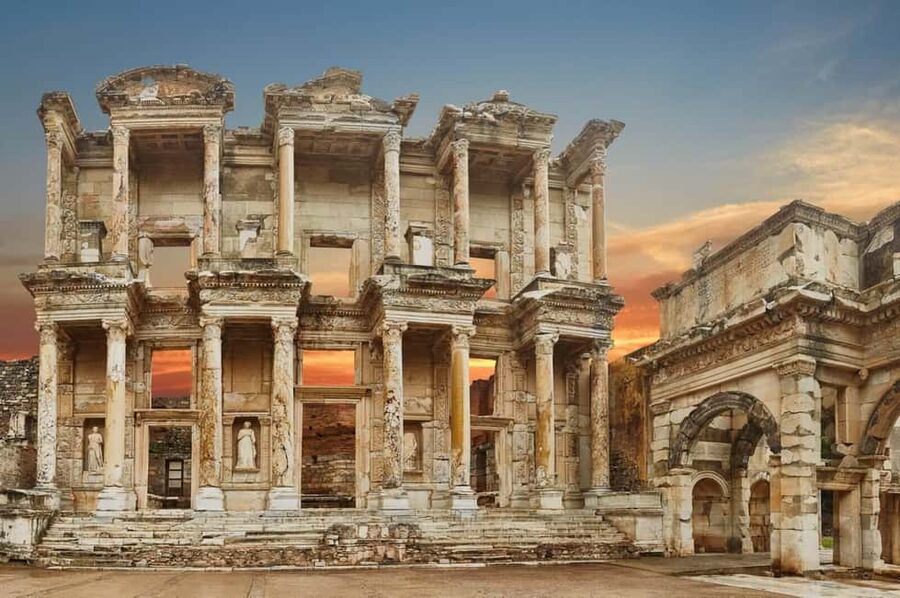
- Ephesus gets about two hours: You’ll see the Celsus Library, Marble Street, Temple of Hadrian, Roman Baths, public toilets, fountains, and the Grand Theatre.
- The House of the Virgin Mary is a pilgrimage site: The small stone house is cared for by Lazarist Fathers and serves both Catholic and Muslim visitors.
- The tour is built for cruise schedules: Port pickup, a private vehicle, and a planned return to Kusadasi make the five-hour format practical.
- Guides make the difference: Kaya, Ali, Memo, Mehmet, Gokhan Kaya, and Eaton have all been praised for clear English, historical detail, and considerate service.
- You may have shopping stops: Carpet weaving, silk cocoons, pottery, and Turkish handicrafts can add local color, but you should be ready to decline purchases.
- The $24 price is only part of the budget: Transportation, guide service, parking, and taxes are included, but site admission is extra.
Why Ephesus is worth your limited port time
Ephesus is one of Turkey’s great ancient sites because it is more than a pile of scattered stones. The main route brings you past civic buildings, religious monuments, shops, fountains, and public facilities, giving you a sense of how a large Roman city functioned.
The city was once an important harbor center and is also named as one of the seven churches in the Book of Revelation. That combination makes the site useful for several kinds of history: Roman public life, early Christianity, Greek and Anatolian traditions, and the long story of trade along the Aegean coast.
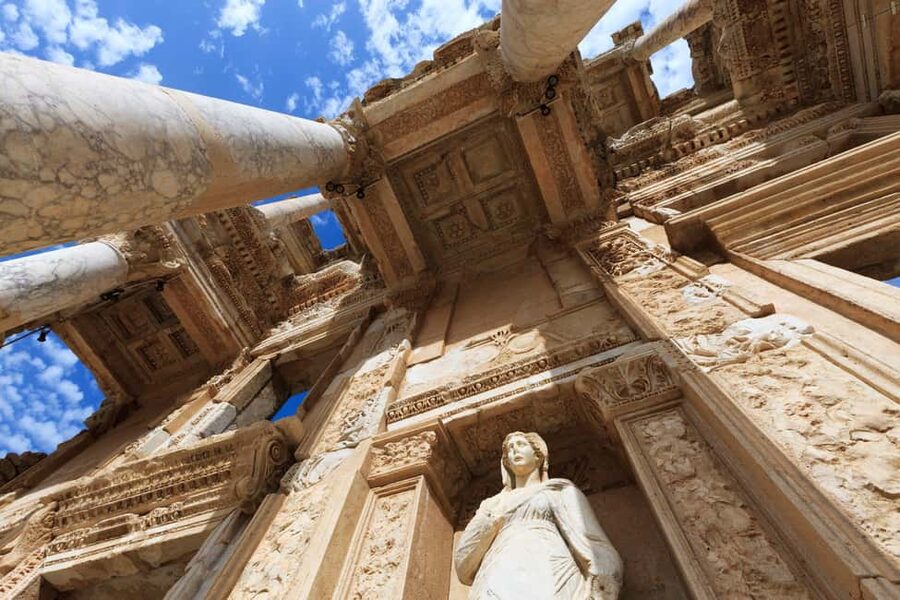
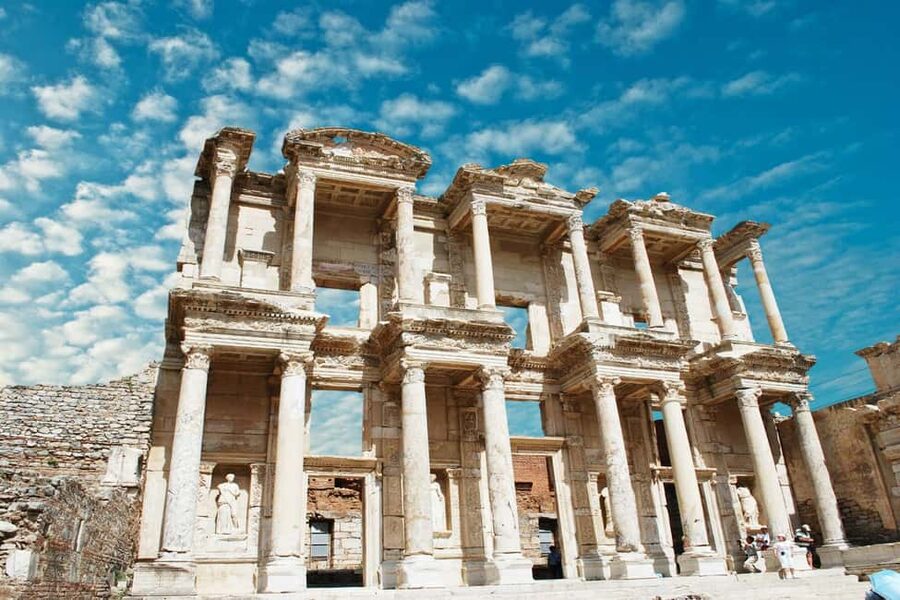
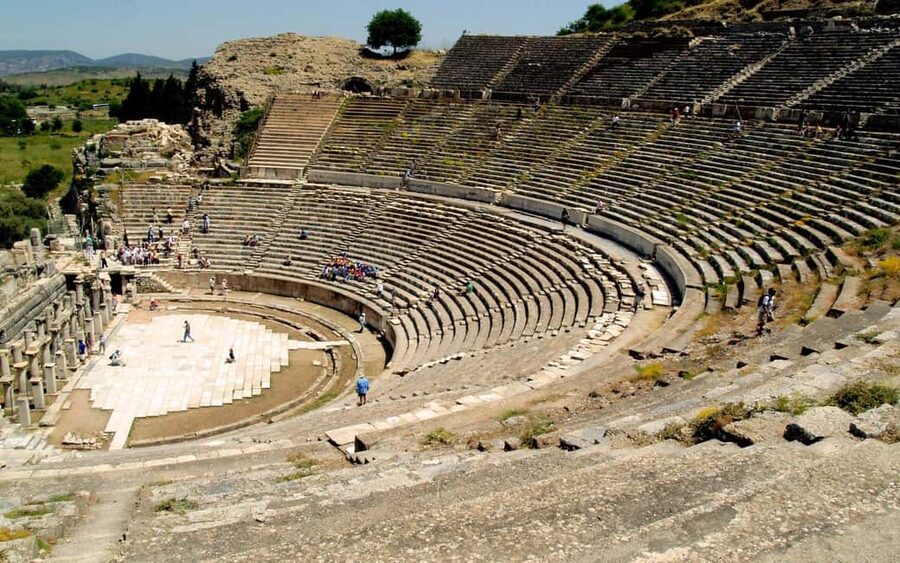
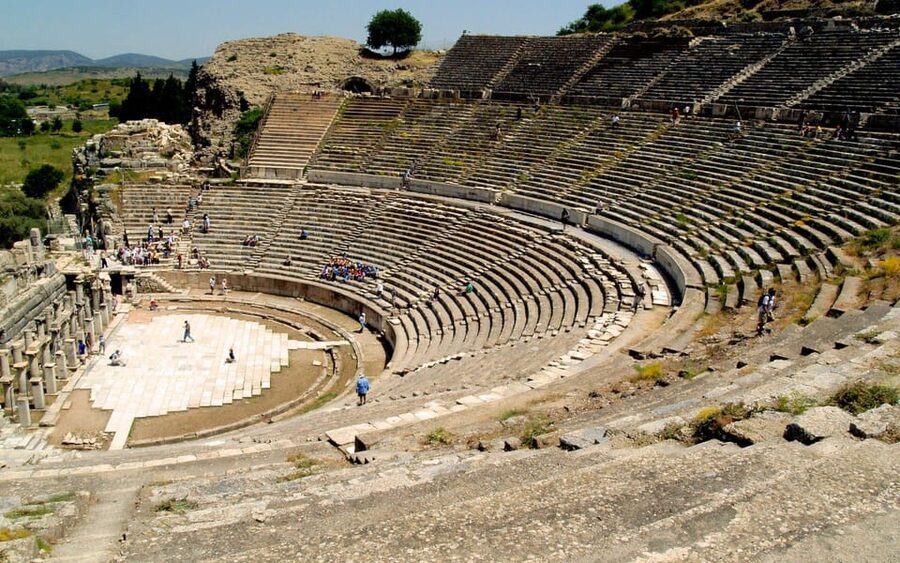
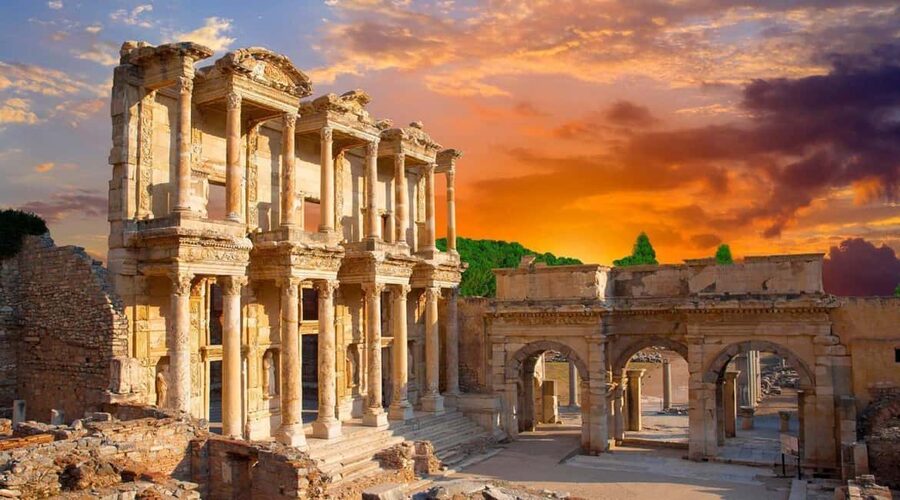
Your guide should help you read the ruins instead of simply photographing them. At the Celsus Library, you can look at the restored facade and hear why the building became one of Ephesus’s best-known symbols. At the Grand Theatre, the scale is the point. This is the place where St. Paul preached to the Ephesians, and the seating gives you a clear sense of how public speeches and performances could reach a large crowd.
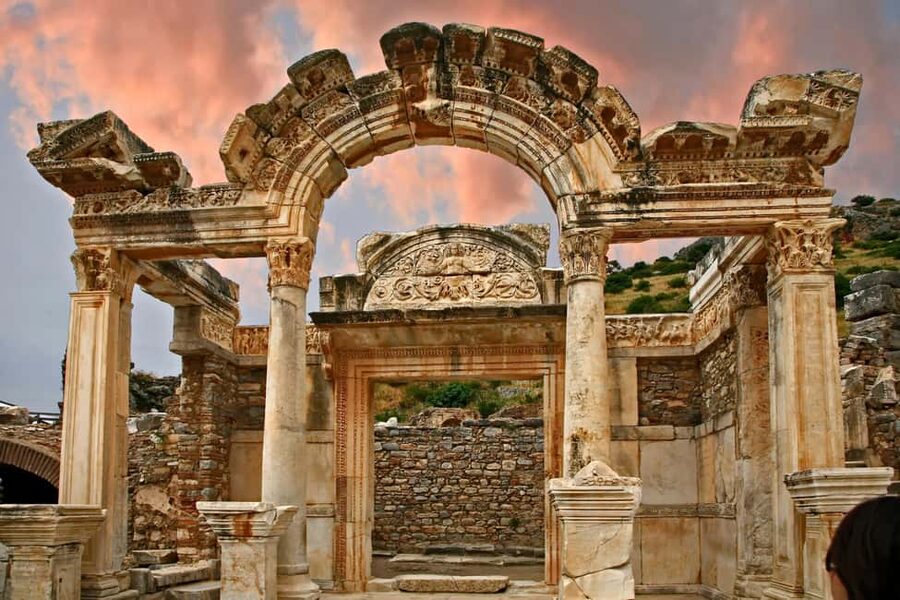
The route also includes the Temple of Hadrian, the Fountain of Trajan, Roman Baths, public toilets, and Marble Street. These details matter because they show daily life rather than only imperial grandeur. The public toilets, for example, are a memorable reminder that ancient cities needed ordinary infrastructure just as much as temples and monuments.
Two hours is enough to cover the main sights with a guide, but it is not enough for a slow, scholarly visit to every corner. Wear practical shoes and expect to walk over uneven ancient surfaces. The site is open and exposed, so your enjoyment will depend partly on the weather and your comfort with sun and walking.
More Mediterranean boat trips around Turkey:
- Istanbul: Bosphorus Dinner Cruise & Show with Private Table
★ 4.8 · 62,058 reviews - Istanbul: Daytime or Sunset Sightseeing Cruise & Audio Guide
★ 4.8 · 14,430 reviews - Istanbul: Bosphorus Dinner Cruise & Turkish Night Show
★ 4.8 · 12,954 reviews
The Celsus Library, Marble Street, and Grand Theatre
The Celsus Library is the photo stop most people expect, but it is worth giving the building more than a quick glance. Its decorated facade was reconstructed from surviving pieces, and your guide can explain the building’s public role and the Roman taste for impressive civic architecture.
Marble Street leads you through the heart of the ancient city. It is easy to imagine the road filled with people moving toward the theater, public buildings, shops, and religious sites. You’ll also see the Temple of Hadrian and the Fountain of Trajan, each helping to show how rulers and wealthy citizens marked their place in the city.
The Grand Theatre is especially important for anyone interested in the early Christian story. St. Paul preached here, and the theater also served as a major public gathering place. Your guide may point out how the structure used its hillside setting, but do not expect a modern museum-style presentation. Much of the pleasure comes from seeing the setting directly and asking questions as you walk.
The site is not a quick roadside photo stop. Even with the efficient route, plan on a serious walk. A private guide helps because you can ask for more detail at the library or theater, or move along when the group has had enough.
The House of the Virgin Mary and its mixed traditions
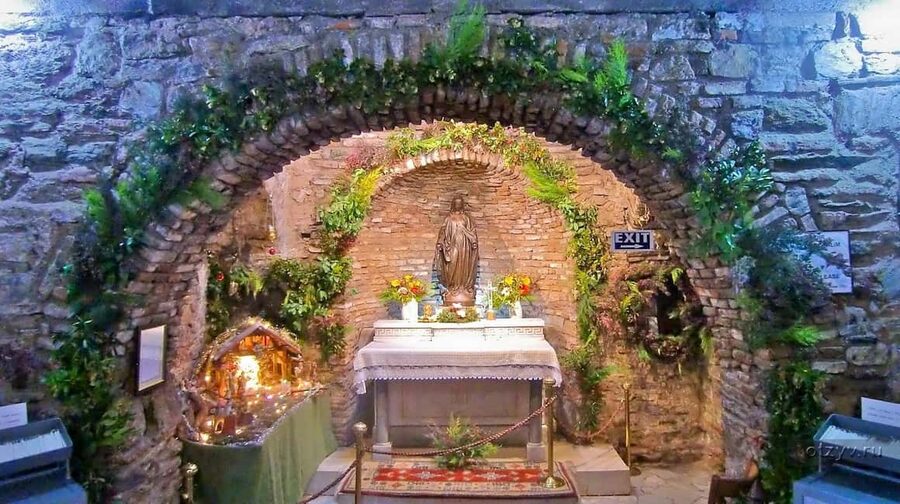
The House of the Virgin Mary sits in the hills near Ephesus and has a different mood from the ancient city. The tradition comes from the visions of a German nun, who described the house and mountain as the Virgin Mary’s final residence. Lazarist priests later identified the location, and the small site is now cared for by Lazarist Fathers.
The place serves both Catholic and Muslim visitors. Mass is celebrated daily, which gives the stop an active religious purpose rather than making it only an archaeological curiosity. You can walk around the site, take photographs where permitted, and observe the devotional character of the place.
I like this stop for the contrast. Ephesus is broad, civic, and monumental. The house is small, quiet, and focused on belief. You do not need to be Catholic to understand why the site matters, but you should treat it as a place of worship and pilgrimage.
The scheduled visit is about one hour, including walking. That is enough time to see the house and absorb the setting without turning the tour into a long religious excursion. If your interest is strictly archaeological, this may be the least essential stop. If you care about Christian history or the connection between local Muslim and Catholic traditions, it adds real depth.
A short stop at the Temple of Artemis
The Temple of Artemis is allocated about 20 minutes, so set your expectations correctly. You will not see a complete temple. You will see the surviving remains beside Ephesus, including the famous column that hints at the scale of the original sanctuary.
Artemis was one of the ancient world’s Seven Wonders. The temple was a major religious center, and its fame reached far beyond the Aegean coast. Today, the stop works best as a brief history lesson and photo opportunity rather than a full archaeological visit.
This is a good place for your guide to explain what has disappeared and why the ruins look so modest compared with the temple’s ancient reputation. Without that context, you may wonder why such a celebrated site takes only a few minutes. With context, the stop becomes a useful reminder that time, reuse, earthquakes, and changing religious traditions can erase even famous monuments.
Same harbour, a different boat:
- FOR CRUISERS: Skip The Lines PRIVATE EPHESUS TOUR &On Time Return
★ 5.0 · 8,527 reviews - Top Choice For Cruisers: Ephesus, Mary’s House WITH TICKETS+LUNCH
★ 5.0 · 7,233 reviews - PRIVATE EPHESUS TOUR FOR CRUISERS: On-time Return and Skip-Line
★ 5.0 · 5,807 reviews - Istanbul: Bosphorus Sightseeing Cruise Tour with Audio Guide
★ 4.6 · 4,704 reviews
The optional Basilica of Saint John
The tour description also mentions the Basilica of Saint John as an optional stop. The ruined church is in nearby Selcuk and is believed to have been built over the apostle’s tomb by Emperor Justinian in the sixth century.
An earthquake destroyed much of the basilica in the fourteenth century, but the remaining ruins still form an important pilgrimage site. If you want to add it, ask your guide at the beginning how much time is available and whether the visit affects lunch, shopping stops, or your return to the ship.
Because the standard route already includes Ephesus, Artemis Temple, and the House of the Virgin Mary, the basilica should not be treated as guaranteed. It is best for visitors with a strong interest in early Christianity who are willing to adjust the day.
What the five-hour schedule feels like
The tour allows about 20 minutes each way in the van, with two hours at Ephesus, 20 minutes at Artemis Temple, and one hour at the House of the Virgin Mary. That leaves a practical margin for meeting at the port, parking, moving between sites, and returning to Kusadasi.
The short driving time is helpful on a cruise stop. You spend most of the day at the actual sites rather than sitting in a vehicle. The air-conditioned van is also useful after walking through open ruins, especially when the weather is warm.
A private or small-group format gives you more control than a large coach tour. Guides have adjusted the schedule for families, and one guide helped a child who used a wheelchair. Still, the information does not promise a fully accessible route at every archaeological site. If mobility is a major concern, discuss the walking plan with the provider before booking.
Pickup is offered at Kusadasi cruise port or a hotel, and the guide meets you with a sign bearing your name. Drop-off returns you to the port or listed Kusadasi locations, leaving the rest of your afternoon free.
The guide can make or break the day
The strongest part of this experience is the guide service. Gokhan Kaya, commonly called Kaya, has been praised for strong English, historical detail, patience, and enthusiasm. He has led visitors through Ephesus while answering questions from start to finish.
Ali Takravedi has also been singled out for looking after a family and adjusting the schedule. Memo has combined site explanations with a local pottery visit, while Mehmet has taken a group to a farm-style lunch made with food from the garden. Eaton has been praised for making the ancient sites easier to understand through clear background information.
These details suggest that the experience depends less on a fixed script and more on the person assigned to your group. You can improve the day by telling the guide early if you want more archaeology, more religious history, a faster pace, or time for lunch.
The guide is also your best protection against confusion over optional stops. Ask directly whether a rug factory, pottery workshop, or handicraft visit is planned. Watching silk cocoons, carpet weaving, or handmade pottery can be interesting, but buying should never be treated as part of the tour requirement.
Lunch, crafts, and the sales-pitch question
Lunch is described as an opportunity rather than a fixed inclusion. Some guides have taken families to a local restaurant or farm setting for homemade food, and this can be one of the more personal parts of the day. You may see chickens and geese around a green lawn, depending on the location arranged for your group.
The tour also offers chances to see Turkish handicrafts. Carpet weaving and silk cocoons can provide useful insight into local craft traditions, while a pottery stop may show handmade dishes and art.
The practical warning is simple: craft demonstrations can become sales visits. One guest enjoyed seeing the weaving and silk production but disliked the intense sales pitch at the rug factory and pottery stop. If you do not want to shop, say so politely and clearly. If you are interested in buying, take your time and do not let a short port visit push you into a purchase.
Since lunch, crafts, and the optional basilica can affect the schedule, confirm what is included before departure. The listed price includes the guide, vehicle, driver, parking, taxes, and port transfers, but not food, crafts, or entrance tickets.
Is $24 a good value?
At $24 per person, the tour is priced attractively for a five-hour private or small-group outing. You are paying for a guide, an air-conditioned vehicle with a separate driver, port pickup and return, parking, and tax. Those services can be especially useful when you have a ship departure to protect.
The important qualification is the admission cost. Entrance fees are separate, so your real spending will be higher than the advertised price. Ask for the current ticket cost before you go, since the tour information does not give a figure.
The value is strongest if you want a guide to explain Ephesus and prefer not to arrange transport independently. It is less compelling if you plan to spend almost all your time shopping, want a very slow archaeological visit, or dislike optional commercial stops.
Free cancellation up to 24 hours before the tour and the reserve-now, pay-later option give you some flexibility. Starting times depend on availability, which is worth checking against your ship’s arrival and departure schedule.
Who should book this Kusadasi tour?
I would choose this tour for cruise passengers who want the main Ephesus sights without spending the entire day on the road. It suits families, first-time visitors, and anyone who wants history explained in clear English.
It is also a good fit if you care about religious sites. The House of the Virgin Mary and the optional Basilica of Saint John offer a useful Christian thread alongside the Roman monuments.
You may want a different arrangement if you want a long, quiet archaeological study, guaranteed time at every optional stop, or no shopping opportunities at all. You should also allow extra planning time if someone in your group has limited mobility, since the route includes walking over ancient surfaces and the accessibility details are not fully specified.
Should you book it?
Book this tour if you want a reasonably priced, port-friendly introduction to Ephesus with a real guide in a private or small-group setting. The best reasons are the efficient route, strong guide record from people such as Kaya, Ali, Memo, and Mehmet, and the chance to combine Roman ruins with the House of the Virgin Mary.
Before paying, confirm the entrance fees, ask whether lunch and craft stops are included in your schedule, and tell the guide how much time you want for shopping. If you do that, this five-hour outing gives you a solid first look at the Aegean Coast’s most important ancient site without putting your ship departure at risk.
FAQ
How long does the Kusadasi Ephesus tour last?
The tour lasts five hours, including transportation between Kusadasi and the sites.
Where does pickup take place?
Pickup is available at Kusadasi cruise port or a hotel. The guide meets you with a sign showing your name.
Is the tour private or shared?
Private and small-group options are available.
What language does the guide speak?
The live tour guide speaks English.
Are entrance fees included?
No. Entrance fees are not included in the listed price.
What is included in the $24 price?
The price includes a professional licensed local guide, an air-conditioned vehicle with a separate driver, port pickup and drop-off, taxes, and parking fees.
How much time is planned at Ephesus?
The schedule allows about two hours at Ephesus Ancient City.
How long is the visit to the House of the Virgin Mary?
The planned visit takes about one hour and includes walking.
Can I cancel the tour for a refund?
Yes. You can cancel up to 24 hours in advance for a full refund.
Just launched around Turkey
- Kemer Full-Day Pirate Boat Trip with Lunch★ 4.1 · 92 reviews
- Kemer: Full-Day Boat Trip with Lunch and DJ★ 4.5 · 33 reviews
- Green Canyon Boat Trip with Lunch and Drinks from Antalya★ 4.2 · 148 reviews
- Kekova Sunken City, Glass-Bottom Boat, Demre & Lycian Ruins★ 4.4 · 59 reviews
- Antalya/Kemer: Phaselis Yacht Trip for Families and Couples★ 4.5 · 183 reviews
- Kas: Kekova Island Sunken City & Historical Sites Boat Tour★ 4.7 · 274 reviews
- Kardamaina: 3-Bay Pirate Boat Cruise with BBQ Lunch★ 4.3 · 84 reviews
- Jeep Safari-Lunch-Boat-Canyon-Waterfall-Foam,Water Party★ 4.9 · 171 reviews
Turkey Boat Trips side by side

Istanbul: Bosphorus Dinner Cruise & Show with Private Table
Read our review →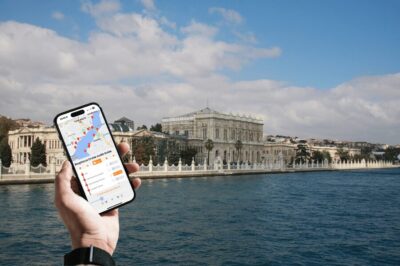
Istanbul: Daytime or Sunset Sightseeing Cruise & Audio Guide
Read our review →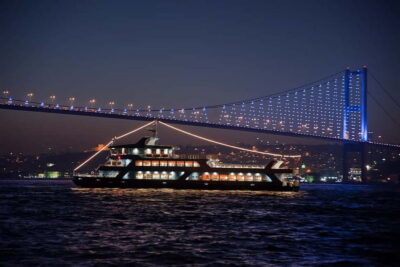
Istanbul: Bosphorus Dinner Cruise & Turkish Night Show
Read our review →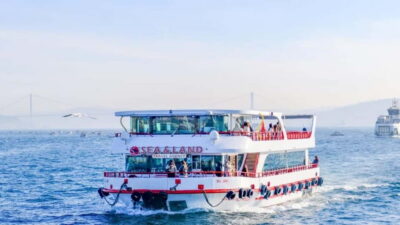
Istanbul: Bosphorus Sightseeing Cruise Tour with Audio Guide
Read our review →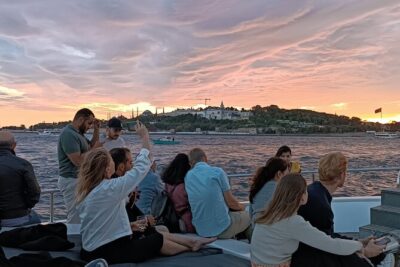
Istanbul Bosphorus Sunset Cruise on Luxury Yacht
Read our review →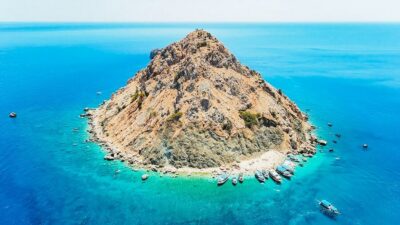
Antalya/Kemer: Suluada Island Small-Group Boat Tour w/ Lunch
Read our review →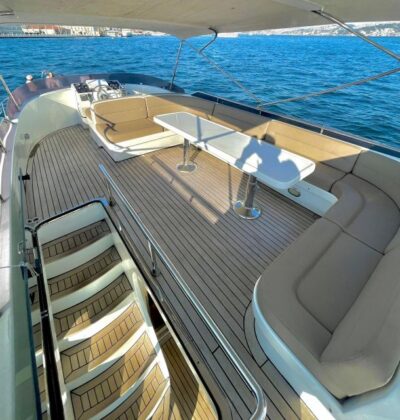
Istanbul: Sunset or Day Small-Group Yacht Cruise with Snacks
Read our review →
Antalya: Suluada Island Boat Trip with Lunch & Hotel Pickup
Read our review →Lists this boat trip appears in